Gravenmark
Factions


Locations


Folklore


Chapters


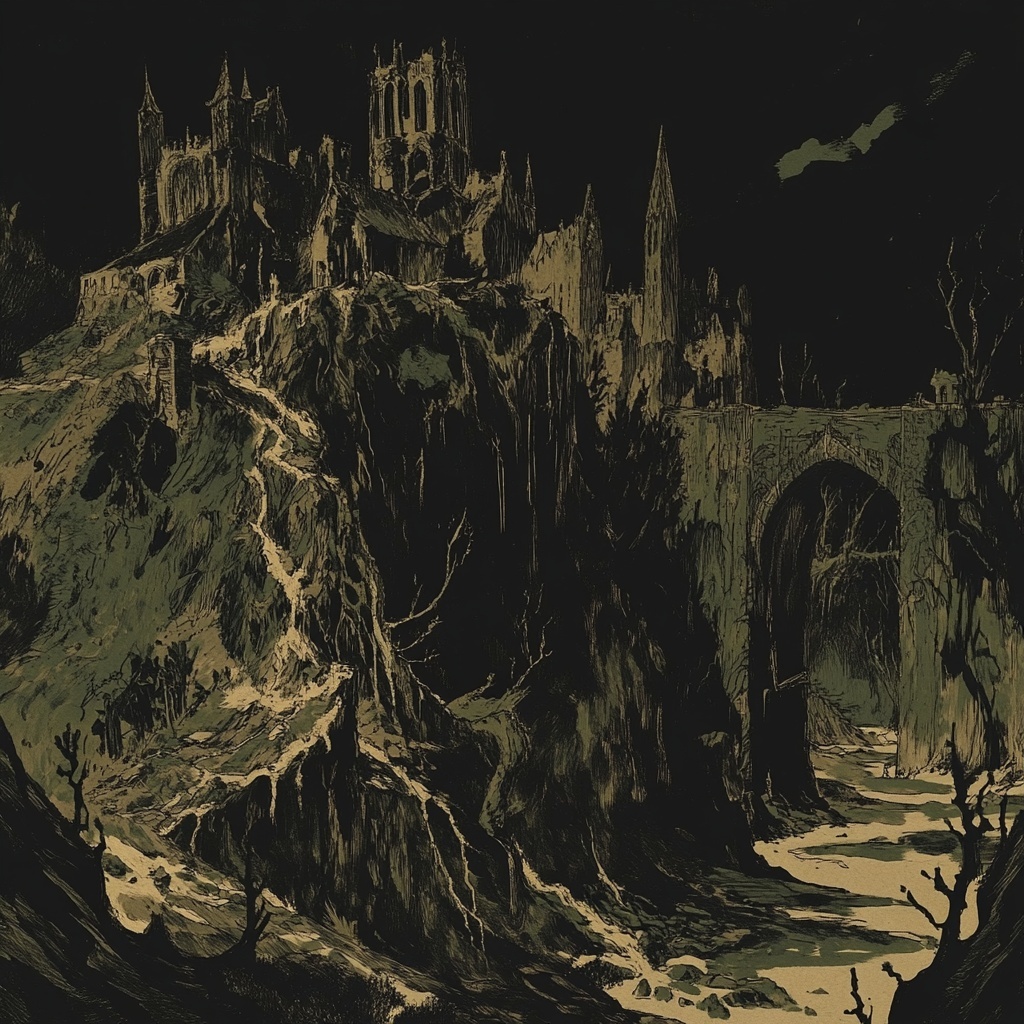
A land draped in rot and memory,
where moss-fed ruins whisper beneath the fog.
The bones of a dead civilisation jut from hillsides and riverbeds —
arches half-sunken, towers halved by time, their makers forgotten.
Regions
- Capital Ambaret
- Coastal Town of Deverain
- Northern Villages of the Duskmeadow Fringe
- Kaldhur Forest, beyond the Wall
- Kryptwood Forest
- Druidic lands of the Wyrmbark
- Sea of Salt in the South, Crystal Frontier after it
Religion
The Church of the Weeping Mother
Ambaretian Calendar
| Jan-Feast Feasting | Variable: Parade of the First Snow |
| Feb-Sit Sit by the fire and wait | |
| Mar-Prune Pruning trees, digging | |
| Apr-Garden Planting, enjoying the country or picking flowers | |
| May-Hunt Hawking, boating, courtly love | |
| Jun-Hay Hay harvest | |
| Jul-Wheat Wheat harvest | |
| Aug-Grain Other grains harvest | |
| Sep-Berries Grapes and berries harvest, making wine and cider | Last week: Feast of All Saints |
| Oct-Sow Ploughing or sowing | |
| Nov-Acorns Gather acorns and feed pigs | |
| Dec-Slaughter Kiling pigs, baking | Last week: Mortunt |
Parade of the First Snow
Legend has it that the ancestors of the northern Levasti were starving hunter-gatherers when fortune shone upon them and showed large animal prints in the fresh snow. These prints led to a herd of grazing animals which they gorged upon. After this successful hunt, the tribe settled here. The villagers now show their respect to their ancestors by awaking at daybreak and marching in pairs through the fresh snow in large boots shaped like hooves.
Feast of All Saints
The various traditions of Ambaret are often celebrated in the northern villages as well. Whereas this festival is an introspective and sombre affair in the capital, families in the countryside celebrate with joy. Perhaps away from the heavy hand of the Crown, the people feel freer to enjoy themselves, or possibly there is just less concern about offending the Church of the Weeping Mother by celebrating some lesser-known Sisters.
Some of the wine and cider made from berries and grapes in September spoil quickly. The best are stored and will survive winter. The sour ones are drunk in abundance at the Feast of All Saints.
Mortunt
Mortunt is an end of year evening affair celebrated in rural communities where brewing and gambling are primary pastimes. Now, it’s mostly a night where revelers gather around massive bonfires, drinking and making merry before going off in groups of two or three to “kill Death” (or, really, do whatever small groups of young people might do during a night of debauchery). What’s mostly forgotten is the origin of the holiday: a tale of three brothers who, in a state of drunken paranoia, set a bounty on Death herself. The group was found dead in a ditch the next morning. Their friends tried to “avenge” their deaths in each of the following years by hunting after Death herself. Rumor is that no one’s collected that bounty yet, and so the festival continues.